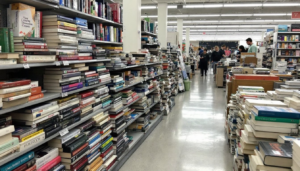
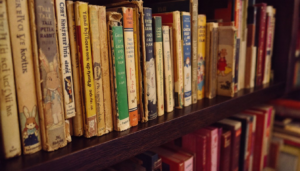
If you need a lot of children’s books at once, the best value usually comes from eBay job lots and local selling groups, with an online used specialist such as AwesomeBooks for filling gaps with specific titles. Buying in quantity changes the maths: delivery, consistency and how much sorting you are prepared to do matter more than the price of any single book.
This list is aimed at parents stocking a playroom, teachers building a class library, Scout and Brownie leaders, and anyone running a book swap. We have included online sources and in-person routes, and judged each on how easily you can get a decent volume of readable books without paying for stock you will end up donating straight back.
Table of Contents
Toggle1. eBay job lots
Search for “children’s books bundle” or “job lot” and narrow by age band or series. Sellers often clear whole shelves at once, so you can pick up a big stack of picture books in one go. This route suits buyers who do not mind sorting. The limitation is quality control: bundles nearly always include a few tired copies, duplicates or titles pitched too young or too old for your group.
2. AwesomeBooks
Best for buyers who want to choose exact titles rather than accept a mixed box, and who need cheap used copies with free UK delivery on every order. That makes it practical to build a reading list book by book without postage stacking up. Each purchase also funds a book donation through its “You Buy, We Give” scheme. Caveat: availability of a particular edition changes, so check the ISBN, and judge condition by what the listing says.
3. World of Books
A large UK used specialist that is handy for topping up a bulk order with particular series, such as Julia Donaldson picture books or Rainbow Magic. Its condition grading helps when you are buying many items and cannot inspect each one. It sells titles individually rather than as curated bundles, so assembling a large collection takes a while at the checkout.
4. Facebook Marketplace
Local listings regularly include boxes of children’s books from families whose children have moved on to secondary school, or who are downsizing. Collecting in person means no postage and a chance to flick through before you hand over any money. The downside is unpredictability. What is available depends on who happens to be clearing out that week, and descriptions can be vague.
5. Vinted
Vinted sellers frequently group books by age or type, such as a bundle of early readers, which suits buyers who want a theme without sorting a huge box. In-app payment includes buyer protection. Books are heavy, though, and postage rises with weight. Larger bundles can turn out less economical than they first look once delivery is added.
6. NCT nearly-new sales
Run by local NCT branches, these sales are packed with baby and pre-school items, and books for younger children are usually plentiful. Prices tend to be low and you can check every page. Sales happen on set dates and venues vary by branch, so you will need to watch local listings. Books for older primary children are less common.
7. Charity shops
British Heart Foundation, Barnardo’s and Oxfam shops often have a children’s shelf. Buying a dozen books in person lets you skip damaged copies entirely, and it is worth telling staff what you are after, since new donations arrive all the time. You will rarely find a matching series in one visit, so treat this as a slow build rather than a one-trip solution.
8. Local library sales
Libraries periodically sell withdrawn stock, and children’s sections are refreshed often. Ex-library books usually come covered in protective film, which makes them hard-wearing for classroom use. Expect stamps, stickers and sometimes worn spines. Ask your library service when sales are planned, as there is no fixed national timetable.
Tips for buying in quantity
- Decide on age bands before you buy so bundles do not fill up with books nobody will read.
- Ask marketplace sellers for a list of titles or a photo of the spines.
- Weigh the postage on heavy bundles against the cost of collecting locally.
- Set aside time to wipe and sort anything heading to babies or toddlers.
- Keep a simple spreadsheet of what you own so you do not buy the same series twice.
Start with one local route and one online source, then compare what actually arrived against what you paid. Most people buying in bulk end up with a mix: bundles for volume, individual orders for the titles children ask for by name.